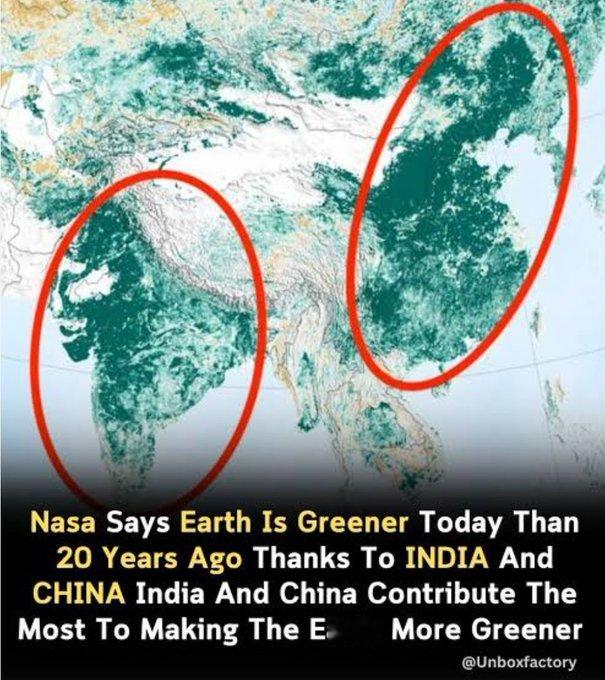
根据 NASA 从 1982–2023 年的卫星记录,地球的绿化速度达到了有记录以来前所未有的水平。
自 1960 年以来,全球作物产量提高了 15–20%,这几乎完全归功于 CO₂ 肥沃化效应(Idso, 2013;IPCC AR6 WG1 Ch5)。在世界人口翻倍的时期,饥荒死亡人数急剧下降,而 CO₂ 功不可没。我们应该感谢过去一个世纪 CO₂ 水平的增加,这带来了植物生命的爆炸式增长,以及来自蓬勃发展的农业的可用植物食物的激增。
在 40 年内,全球叶面积增加了超过 18%,其中印度和中国从 CO₂ 肥沃化效应中获得了最大收益。温暖而宜人的温度正在延长生长季节。这些是全球水蒸气和云层覆盖率上升的特征。每增加 100 ppm 的 CO₂,在所有非水分限制条件下,通常会使植物生长提高 25–50%。
这项分析基于 1993–2019 年的 776 项研究,显示理想的平均 CO₂ 水平为 550 ppm,可使全球生物量增加 38%。
这是 CO₂ 为地球生命带来的惊人意外之喜,这种微量气体浓度仅为 420 ppm(或 0.04%)。它还通过贡献全球基线温度水平,为生命带来次要益处,与水蒸气以及其他具有类似性质的微量气体(如甲烷,约 1.9 ppm 或 0.00019%)一起作用。
然而,水蒸气和云层覆盖是降雨和整个水文循环的主要支柱,将水以降水形式返回河流、湖泊和海洋(其中 78% 的雨水最终落入海洋)。
这些就是商业温室故意将 CO₂ 泵送到 1,000–1,500 ppm 的原因。这确保了作物产量根据作物类型跃升 20–70%。如果 1000 ppm 对西红柿有益,为什么 420 ppm 对地球来说是“紧急情况”?
科学表明,600–1,000 ppm 的 CO₂ 加上 1–2°C 的额外变暖,是所有陆地和海洋生命(包括人类文明)的理想状态。我们不应该对这种让地球更绿化的微量气体开战。
更高的 CO₂ 对地球生命是净益处。
The Earth is greening at a rate never seen before in all recorded history, according to NASA satellite records from 1982–2023.
Global crop yields have risen 15–20% since 1960, almost entirely attributable to CO₂ fertilisation (Idso, 2013; IPCC AR6 WG1 Ch5). Famine deaths have plummeted over a time when the world's population doubled and CO₂ deserves much of the credit. We have increased CO₂ over the past century to thank for this explosion in plant life and available plant food from booming agriculture.
There's been a more than 18% increase in the global leaf area in 40 years, with the largest gains in India and China from CO₂ fertilisation. Warmer and more balmy temperatures are lengthening the growing seasons. These are features of rising levels of water vapour and cloud cover around the world. Every 100 ppm increase in CO₂ typically boosts plant growth by 25–50% in all non-water-limited conditions.
This analysis draws on 776 studies from 1993–2019, showing an ideal average CO₂ level of 550 ppm delivers a 38% increase in global biomass.
It's an astonishing windfall for life on earth from CO₂, a trace gas at 420 ppm (or 0.04%). It also has a secondary benefit for life by contributing to baseline levels of warmth around the planet, along with water vapour and other trace gases with similar properties, like methane (approx. 1.9 ppm or 0.00019%).
However, water vapour and cloud cover are the mainstays of rainfall and the entire hydrologic cycle, returning water as precipitation to rivers, lakes, and oceans (where 78% of rain ends up).
These are the reasons why commercial greenhouses pump CO₂ to 1,000–1,500 ppm deliberately. It ensures that crop yields jump by 20–70% depending on the crop. If 1000 ppm is good for tomatoes, why is 420 ppm an 'emergency' for the planet?
The science says 600–1,000 ppm of CO₂ plus 1–2°C extra warming hits the sweet spot for all terrestrial and marine life, including human civilisation. We should not be waging war on a trace gas that makes the planet greener.
Higher CO₂ is a net benefit to life on Earth.